Source Automatic Cylinder UV DTF Printer for Labels, Cards, and Cloth
Compare 29 listings of the automatic cylinder UV DTF printer designed for labels, cards, and cloth. Buyers can evaluate specifications like print heads, speeds, and dimensions to find suitable suppliers.
Key considerations
Products List


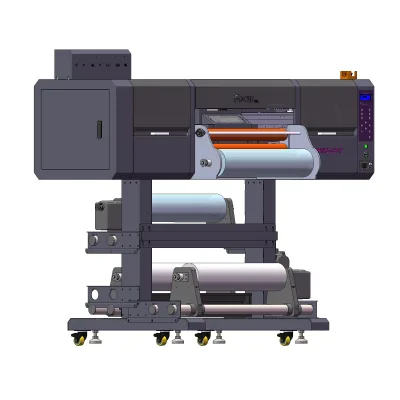
New Design 360 UV Printer Cylinder Automatic High Speed Cylinder UV Printer
$15000.00 - $25000.00
Moq: 1




Comprehensive Sourcing Guide
Strategic Sourcing Guide for Automatic Cylinder UV DTF Printers
Understanding the Core Technology and Configuration
The search for an automatic cylinder UV DTF (Direct to Film) printer requires a precise understanding of the hybrid machinery that combines flat-bed or cylinder press capabilities with UV curing technology. Based on observed market data, these machines are not monolithic; they exist in configurations ranging from flat-bed cylinder presses to rotary letterpress structures. The "Automatic Grade" is a critical classification, indicating that the machinery is designed for continuous operation with minimal manual intervention, a feature essential for high-volume B2B production environments.
The structural integrity of these units varies significantly. Some observed models utilize a "Flat-Bed Cylinder Press" structure, which is ideal for printing on rigid or semi-rigid cylindrical objects, while others employ a "Platen Press" or "Rotary Letterpress" design. The distinction is vital for procurement because the mechanical structure dictates the maximum medium height and the types of substrates that can be processed. For instance, specific models in the current market support a medium height of up to 10cm, with options for ultrahigh customization. Buyers must verify if the cylinder rotation mechanism aligns with their specific product geometry, as the "Automatic" designation implies a synchronized motion between the print head and the substrate holder.
Furthermore, the printing interface is a primary differentiator. Data indicates a prevalence of USB3 and USB2 interfaces, alongside 1000Base-T (Ethernet) connectivity. This suggests that while some units may rely on direct local connections, others are integrated into networked workflows. The system support is consistently listed as Windows XP, which presents a specific compatibility constraint for modern IT environments. Procurement teams must assess whether the legacy operating system requirement necessitates dedicated hardware or virtualization solutions to ensure seamless integration with existing design and management software.
Technical Specifications and Performance Metrics
When evaluating the technical specifications of an automatic cylinder UV DTF printer, the print head configuration and ink system are the most critical performance drivers. The market data reveals a variety of print head options, including the I3200, XP600, 1600, and Dx7 models. High-end configurations often feature multiple heads, such as "4* I3200 Print Heads," which directly correlates to increased throughput. The printing speed is a function of these heads and the pass count; for example, a 4-pass configuration can achieve a speed of 24 square meters per hour, whereas other models may list speeds in CPI (characters per inch) or specific area metrics like 7.5 CPI.
The ink system is equally diverse. While the core keyword specifies "UV DTF," the observed data includes "UV Ink" and specific color configurations like "W + Cmyklclm + Light Oil." This indicates that the machine may be capable of handling white ink underbasing, which is essential for printing on transparent or dark substrates. The "Porous Printing" plate type suggests a specific interaction with the ink and substrate, likely requiring a porous surface for optimal adhesion, whereas "Relief Printing" or "Lithography Printing" plates indicate different mechanical transfer methods.
Resolution and speed are often traded off against each other. A model described as a "360 hiqh speed printer" (likely a high-speed variant) may prioritize velocity over the highest possible resolution. Conversely, models with a "Maximum Printing Width" of 600mm offer versatility for wider formats. Buyers should note that the "Printing Speed_6pass" is recorded as 7 square meters, which serves as a benchmark for high-quality, multi-pass operations. The voltage requirements are standardized at 220V-110V/50Hz-60Hz, ensuring global compatibility, but the physical dimensions vary widely, from 12050116cm to larger industrial footprints of 180010001500mm.
Compliance, Certification, and Safety Standards
In the B2B procurement of industrial printing machinery, compliance with safety and environmental standards is non-negotiable, yet specific certification data is often absent from general product listings. The observed "prod_standard" values, such as "0.8CBM" or specific dimensions like "180010001000mm," refer to shipping volume and physical footprint rather than regulatory certifications. Buyers must independently verify that the supplier adheres to international safety standards, such as CE (Conformité Européenne) for electrical safety, RoHS (Restriction of Hazardous Substances) for material composition, and ISO 9001 for quality management systems.
The use of UV ink and UV curing lamps introduces specific safety considerations. The machinery must be equipped with proper shielding to prevent UV radiation exposure to operators. Additionally, the ventilation requirements for the curing process and ink fumes must be addressed. While the product data lists the "Status" as "New," it does not confirm the presence of emergency stop mechanisms, interlocks, or fire suppression systems. Procurement teams should request detailed safety manuals and compliance certificates from the supplier before finalizing the order. The "Wooden" or "Wooden Box" packing mentioned in the data is standard for export but does not imply compliance with ISPM 15 (International Standards for Phytosanitary Measures) for wood packaging, which is often required for international shipping.
Cost Drivers and Total Cost of Ownership
The pricing for automatic cylinder UV DTF printers in the observed market ranges from $885 to $25,000 USD. This wide disparity is driven by several key factors, including the number of print heads, the complexity of the cylinder mechanism, and the level of automation. A unit with a single I3200 head and basic USB2 connectivity will sit at the lower end of the spectrum, while a multi-head system with Ethernet integration and custom cylinder capabilities will command a premium.
Beyond the initial purchase price, the Total Cost of Ownership (TCO) must be calculated. This includes the cost of consumables, specifically the UV ink and DTF films. The "W + Cmyklclm + Light Oil" configuration suggests a complex ink system that may require frequent maintenance or specific cleaning solvents. The "Medium Height" customization capability may also incur additional costs for custom jigs or fixtures. Energy consumption is another variable; high-speed models with multiple heads and powerful UV lamps will have a higher power draw.
Maintenance and spare parts availability are critical cost drivers. The "Status: New" designation implies the machine is current, but the longevity of components like the print heads (I3200, Dx7, etc.) and the UV lamps must be considered. The "MOQ range: 1-1" suggests that single-unit purchases are common, but buyers should negotiate bulk pricing for spare parts or consumables to mitigate long-term operational costs. The "Create Bracket and Seal" packing method indicates a need for careful handling, which may influence shipping and insurance costs.
Typical Applications and Substrate Versatility
The versatility of automatic cylinder UV DTF printers makes them suitable for a broad range of applications. The observed "Usage" categories include Label Printer, Card Printer, Cloths Printer, and Paper Printer. This indicates that the machinery can handle flat substrates like paper and cards, as well as flexible materials like textiles. The "Flat-Bed Cylinder Press" structure specifically enables the printing of cylindrical objects, expanding the application scope to items like bottles, cups, and pens.
The "Multi-Colour Printing Press" capability ensures that complex, full-color graphics can be reproduced with high fidelity. The ability to print on "Cloths" suggests that these machines are increasingly used in the fashion and apparel industry for customizing garments with durable, UV-cured designs. The "Label Printer" usage highlights applications in packaging and logistics, where high-resolution, durable labels are required. The "Card Printer" application points to the production of ID cards, membership cards, and promotional materials.
Buyers should verify the specific substrate compatibility for their intended use cases. While the machine may support a "Maximum Printing Width" of 600mm, the thickness and rigidity of the substrate are equally important. The "Ultrahigh Customizable" medium height suggests that the machine can accommodate thicker items, but the cylinder rotation mechanism must be compatible with the specific shape and weight of the product.
Supplier Evaluation and Quality Control Protocols
Selecting the right supplier for an automatic cylinder UV DTF printer requires a rigorous evaluation process. The "prod_origin: China" is a common attribute in the current market, but buyers should not rely solely on the country of origin. Instead, they must assess the supplier's technical support capabilities, after-sales service network, and warranty terms. The "Customization: Available" attribute is a strong indicator of a supplier's flexibility, but it requires clear communication of specifications to avoid misunderstandings.
Quality control should be a priority throughout the procurement process. Buyers should request pre-shipment inspection reports that verify the machine's functionality, including print head alignment, UV curing intensity, and cylinder rotation accuracy. The "prod_packing" methods, such as "Wooden Packing" or "Wooden Case," should be inspected to ensure they meet the rigors of international shipping. The "Standard" dimensions provided in the data should be cross-referenced with the actual product to ensure there are no discrepancies in the shipping volume or weight.
Communication regarding the "System Supported: Windowsxp" is critical. Suppliers should provide clear instructions on how to migrate this legacy system to a modern environment or provide compatible drivers. The "Printing Interface" options (USB3, USB2, 1000Base-T) should be tested to ensure they function correctly with the buyer's existing IT infrastructure.
Long-Term Procurement and Operational Considerations
Long-term success with an automatic cylinder UV DTF printer depends on strategic planning for scalability and maintenance. The "Automatic Grade" implies that the machine is designed for continuous operation, but the wear and tear on mechanical components like the cylinder drive and print head carriage must be managed proactively. Buyers should establish a maintenance schedule that includes regular cleaning of the print heads, calibration of the UV lamps, and inspection of the cylinder alignment.
The "Customization" aspect of the machine offers opportunities for future expansion. As the business grows, the ability to modify the medium height or add additional print heads can extend the machine's lifecycle. However, buyers should verify the availability of upgrade kits and the cost of such modifications. The "New" status of the products suggests that the technology is current, but the rapid evolution of print head technology means that future upgrades may be necessary to maintain competitiveness.
Finally, the procurement strategy should include a plan for operator training. The complexity of the "Flat-Bed Cylinder Press" and the "UV Ink" system requires skilled operators to ensure optimal performance and safety. Suppliers should be required to provide comprehensive training materials and on-site support during the initial installation phase. By focusing on these long-term considerations, buyers can ensure that their investment in an automatic cylinder UV DTF printer delivers sustained value and operational efficiency.
FAQs
What printing interfaces are supported by these printers?
These printers support USB2, USB3, and 1000Base-T interfaces. The system compatibility is consistently listed as Windows XP, which may require specific driver configurations for modern networks.
Which print head models are available for this equipment?
Available print head options include I3200, XP600, 1600, and Dx7 models. High-end configurations often utilize multiple heads, such as four I3200 units, to increase printing throughput and speed.
Can the medium height be customized for specific products?
Yes, the medium height is customizable and can reach up to 10cm for ultrahigh requirements. This flexibility allows the machine to process various substrate thicknesses beyond standard flat-bed limitations.
What is the typical packing method for shipping these units?
The standard packing method involves wooden boxes or wooden cases to ensure safe transport. Some configurations also include creating brackets and sealing the unit to prevent damage during international shipping.
How does the printing speed vary across different models?
Printing speeds vary significantly, with some models achieving 24 square meters per hour in 4-pass mode. Other specifications list speeds in CPI or specific area metrics like 7 square meters for 6-pass operations.
What voltage requirements must be met for operation?
The machines operate on a voltage range of 220V to 110V at 50Hz to 60Hz. This dual voltage capability ensures global compatibility for buyers in different regions without needing external transformers.